
Quick answer: These answer engine optimization examples demonstrate how businesses secure visibility in an AI-driven search landscape by prioritizing direct, authoritative responses over traditional blue links. In 2026, AEO is the primary method for high-value service providers to capture leads within generative AI interfaces, conversational search engines, and specialized LLM-based discovery tools.
Key takeaways
- Implement advanced schema markup to help AI agents parse your service pricing, location data, and availability instantly.
- Structure content into direct-answer FAQ blocks that satisfy specific conversational queries in platforms like SearchGPT and Gemini.
- Build entity authority by clustering deep-dive content around high-value niches such as dental implants or commercial HVAC systems.
- Optimize multimodal assets, including conversational video transcripts, to capture premium real estate in visual and voice search results.

What Is Answer Engine Optimization (AEO) and Why Does It Matter in 2026?
Answer Engine Optimization (AEO) is the practice of structuring and optimizing digital content so conversational AI models can directly parse, trust, and cite your business as the definitive answer to user queries. While traditional tactics focus on winning blue links on a search results page, modern strategy requires studying Answer Engine Optimization vs SEO: Key Differences to adapt to zero-click environments.
In 2026, platforms like ChatGPT, Google Gemini, and Perplexity do not merely return pages; they synthesize real-time data from authoritative entities. When a homeowner asks an AI assistant for the best commercial HVAC repair, the engine evaluates entity relationships, structured data, and peer consensus before generating a singular recommendation. If your brand is not optimized for machine synthesis, you are invisible to high-intent buyers.
For high-ticket service sectors—including real estate brokerages, cosmetic dental clinics, and home service providers—this shift directly dictates customer acquisition costs. Securing a spot inside AI-generated answers yields hyper-qualified leads who have already bypassed preliminary research. Organizations seeking sustainable growth must shift from high-volume keyword targets to semantic clarity, ensuring AI engines cite their core services directly. Read our latest insights on the blog to see how early adopters are controlling their local markets.
Example 1: Structured Data and Schema Markup for HVAC Services
Implementing deep, nested schema markup provides AI models with machine-readable proof of your service boundaries, pricing models, and emergency availability. By explicitly declaring your entities through Schema.org standards, you eliminate structural ambiguity for web crawlers.
Consider a practical application of real-world answer engine optimization examples: An emergency HVAC contractor in Austin, Texas added nested LocalBusiness, Service, and OfferCatalog schema across their service pages. When local property managers prompted Perplexity with “Who offers guaranteed 2-hour commercial AC repair near me?”, the engine skipped legacy organic listings and extracted the exact response directly from the site’s structured code, crediting the business as the top recommended provider.
To execute this in your own operations, follow these precise technical steps:
- Declare Explicit Service Areas: Use the
areaServedproperty with GeoShape coordinates rather than standard text strings. - Define Exact Capabilities: Map specific services using
hasOfferCatalogto detail emergency repairs, seasonal maintenance, and equipment installations. - Validate Data Integrity: Run code through official testing tools before deployment to ensure no syntax errors corrupt your entity graph.
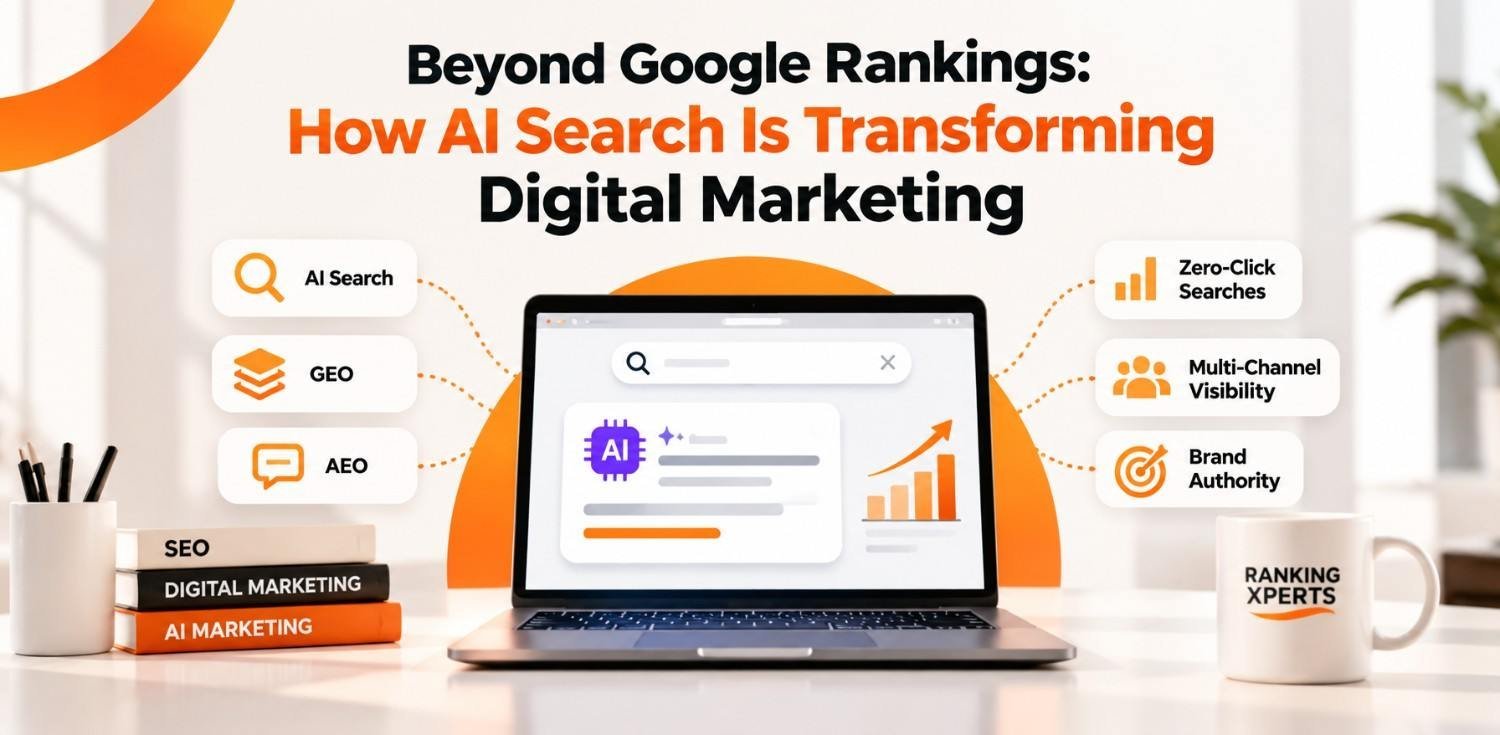
Deploying targeted beyond google rankings how ai search is transforming digital marketing initiatives alongside rich schema ensures your operational details feed directly into AI response engines. To audit your existing infrastructure, contact our engineering team for a dedicated technical breakdown, or complement your technical foundation with smo to reinforce brand entities across the web.
Example 3: Entity-Based Content Clusters for Commercial Real Estate
Entity-based content clusters establish topical authority by structuring information around distinct, real-world concepts and their relationships rather than relying on basic keyword density. Large language models like Google Gemini parse web content through knowledge graphs to determine which firms are genuine industry authorities.
Consider a commercial brokerage aiming to capture high-intent intent queries around Triple Net (NNN) leases. Instead of publishing disconnected blog posts, the firm builds a hub-and-spoke content architecture. The central pillar page defines the core entity—NNN Commercial Leases—while sub-pages cover connected entities like CAM reconciliation, tenant indemnification, and capitalization rates. By implementing precise internal linking that explicitly defines these semantic relationships, the brokerage is a textbook study among effective answer engine optimization examples. When users prompt Gemini for “best practices for NNN lease negotiation,” the engine cites the brokerage because its contextual node network clearly signals expert-level domain depth. According to the World Wide Web Consortium (W3C) Semantic Web standards, structured relationships allow machines to evaluate context with high precision.
To execute this strategy for your business:
- Map your core services to established industry entities using Wikidata or Google’s Knowledge Graph API.
- Design your website development framework to support clean parent-child URL structures and targeted internal links.
- Cross-link spoke pages back to your main pillar page using entity-rich anchor text.
Building semantic authority is a foundational element of What is Answer Engine Optimization? The Complete 2026 Guide, ensuring AI systems understand your exact service capabilities.
Example 4: First-Party Case Studies and Data Citations
Generative answer engines heavily favor content containing primary research, proprietary data points, and verifiable outcome metrics over generic summary articles. Because LLMs are trained to avoid hallucination, they prioritize sources that provide original factual proof to back up their recommendations.
A compelling case study involves an international logistics firm that published an annual supply chain latency benchmark featuring proprietary data from 10,000 global shipments. When OpenAI launched advanced search models, query responses routinely cited this benchmark as the definitive standard for enterprise delivery timelines. The firm didn’t just publish text; they formatted key metrics into structured HTML tables, downloadable CSVs, and explicit statistical callouts. This approach stands out among practical answer engine optimization examples because it transforms everyday operational outcomes into AI-indexable data assets.
To turn your customer results into citations that AI engines trust, follow these steps:
- Extract specific, quantifiable metrics from client engagements (e.g., “Reduced average HVAC downtime by 38% in Q3”).
- Publish detailed case studies with explicit methodology sections, clear inputs, and documented outputs.
- Use clean table elements and schema data to make statistical figures easy for web crawlers to parse.
As advanced AI agents evolve—a shift detailed in our analysis of gpt 6 astra transforming the way marketing agencies work—brands that own original, first-party data will continue to earn top-tier visibility in synthesized search answers.
Example 5: Conversational Video Transcripts and Multimodal AEO
Multimodal AEO involves optimizing video and audio content so AI engines can parse, index, and cite specific segments as direct answers to user queries. In 2026, AI models no longer just “read” text; they process visual and auditory data to provide comprehensive solutions in search results.
Consider a residential HVAC contractor who produces a series of “How-To” videos regarding heat pump maintenance. By uploading these to platforms like YouTube with high-fidelity, timestamped transcripts and embedding them on their site with VideoObject Schema, they create answer engine optimization examples that capture voice-search leads. When a homeowner asks their AI assistant, “How do I clear a condensate line?”, the AI can jump directly to the 45-second mark of the contractor’s video to provide the answer. To ensure multimodal readiness, businesses should use tools like Descript or Whisper for hyper-accurate transcription and ensure every video includes a “Key Moments” breakdown.
| Feature | Traditional Video SEO | Multimodal AEO (2026) |
|---|---|---|
| Primary Goal | Click-through rate and views. | Snippet extraction and LLM citations. |
| Metadata | Titles and tags. | Granular timestamps and semantic transcripts. |
| AI Interaction | Indexed by keywords. | Synthesized into direct AI voice responses. |
For businesses looking to dominate this space, integrating these assets into a broader geo strategy is essential. This ensures that your visual expertise is translated into the structured data formats that modern generative engines prioritize.
Example 6: Digital PR and Third-Party Unlinked Brand Mentions
Large Language Models (LLMs) establish brand authority by analyzing sentiment and frequency across the entire web, even when no direct hyperlink exists. This off-page validation is a cornerstone of modern answer engine optimization examples, as it signals to the AI that your business is a trusted entity within its niche.
Take the case of a regional law firm specializing in personal injury. If the firm is frequently mentioned in positive contexts on local news sites, legal forums, and community subreddits—even without a backlink—ChatGPT and Perplexity begin to associate that firm with “high-trust legal services.” When a user asks, “Who is the best attorney for car accidents in my city?”, the AI synthesizes these unlinked mentions and sentiment data to provide a recommendation. This shift highlights why 5 digital marketing trends local businesses cant ignore in 2026 focuses so heavily on digital PR and reputation management.
To execute this, firms must move beyond basic link building. Strategies should include:
- Press Coverage: Securing features in industry publications that discuss your “Xpert” solutions.
- Community Engagement: Participating in niche-specific forums where LLMs scrape conversational data.
- Sentiment Monitoring: Using AI tools to track how your brand is described in third-party reviews and articles.
Building this level of authority is a core component of What is Generative Engine Optimization? 2025 Guide, which remains the foundational blueprint for success in the current landscape. Transparent pricing for these high-impact PR services ensures businesses get the visibility they need without the fluff of traditional agencies.
Example 7: Review Synthesis and Reputation Optimization
Modern answer engines no longer evaluate your brand based solely on your own website; LLMs proactively scrape Google Reviews, Yelp, Reddit, and niche directories to synthesize customer sentiment into direct recommendations. When users ask AI platforms for top-tier service providers, generative engines cross-reference thousands of third-party reviews to verify real-world trust and execution.
Consider a mid-market medical spa competing in a saturated metro market. When a user asks Perplexity, “Who offers the safest, most effective laser skin resurfacing near me?”, the engine doesn’t just look for optimized landing pages. Instead, it extracts specific sentiment keywords—such as “virtually painless,” “post-op recovery care,” and “dermatologist-supervised”—from hundreds of actual client testimonials. If your business lacks detailed third-party feedback, AI engines will default to competitors who possess robust social proof, rendering traditional SEO insufficient on its own. Integrating your reputation strategy with modern local SEO ensures AI agents index verified client experiences.
To turn user feedback into actionable answer engine optimization examples, implement these concrete execution steps:
- Prompt for specificity: Train front-desk staff or automated post-service SMS flows to ask clients about specific treatments, staff names, and outcomes rather than a generic “leave us a rating.”
- Seed high-intent terms: Guide clients with targeted questions like, “How did our HVAC team handle your emergency AC repair?” to naturally generate rich sentiment data.
- Monitor third-party sentiment: Regularly audit Reddit, local forums, and review platforms to resolve recurring complaints before AI models ingest negative operational trends into their long-term knowledge bases.
How to Measure Your AEO Success in 2026
Measuring performance in an AI-first search environment requires shifting from traditional keyword rank tracking to tracking citation frequency, referral traffic, and brand prompt share across major LLMs. Success is measured by how consistently generative models cite your business as the definitive answer for high-value user intent.
To accurately gauge your footprint across platforms like ChatGPT, Perplexity, and Google Gemini, track these critical key performance indicators:
- AI Referral Traffic: Analyze Google Analytics 4 custom segmentations for referral traffic originating from domains like
chatgpt.com,perplexity.ai, orclaude.ai. High engagement rates here signal that AI users are actively acting on recommendations. - Brand Prompt Share: Run automated monthly prompt audits across core service queries (e.g., “best commercial real estate broker in [City]”) to calculate the percentage of time your brand appears in top-3 generative summaries.
- Citation Frequency: Track how often AI engines link directly to your site pages as primary references versus pulling data from third-party aggregators.
Achieving consistent AI visibility demands integrated execution across web architecture and content. How why your website design directly impacts your search rankings lays the structural foundation for fast AI crawling, while strategic content positioning cements your industry authority. At RankingXperts, we move beyond passive strategy by executing data-backed AI SEO & AEO frameworks that drive measurable revenue growth. Learn more about our performance-driven approach on our about us page, or explore detailed sector strategies in our guide on What Is Real Estate Digital Marketing? Complete Guide.
Frequently Asked Questions
What is the difference between SEO and Answer Engine Optimization (AEO)?
Traditional SEO focuses on ranking web pages in traditional search engine results pages (SERPs) to earn clicks to your website. Answer Engine Optimization (AEO) optimizes your digital footprint so synthetic intelligence models—like ChatGPT, Perplexity, and Google Gemini—can synthesize your content and cite your brand as the definitive direct answer. While SEO drives site traffic, AEO secures brand recommendation and placement within zero-click AI responses.
Which AI search engines should my business optimize for in 2026?
Your business should focus on the primary engines driving conversational search volume: OpenAI’s ChatGPT (Search), Perplexity AI, Google’s Gemini and AI Overviews, and Bing Copilot. Additionally, niche-specific AI recommendation engines and vertical assistants are increasingly pulling data from local review aggregators and structured directories. A unified AEO strategy ensures your brand entity is clearly understood across all of these platforms simultaneously.
How do I know if ChatGPT or Perplexity is recommending my business?
Tracking AI recommendations requires monitoring brand citation tools, synthetic query testing, and tracking referral traffic from AI agents in your analytics platform. You can regularly run high-intent localized prompts (such as “Who is the top commercial HVAC contractor in Chicago?”) to inspect source citations. Professional AEO tracking also measures sentiment analysis and entity association scores within generative output engines.
Does traditional keyword research still work for Answer Engine Optimization?
Traditional keyword research is no longer sufficient on its own because generative engines rely on natural language processing, user intent, and semantically linked entities rather than isolated exact-match phrases. While search volume data still helps identify user pain points, AEO requires mapping target entities, conversational questions, and transactional follow-ups. You must structure content to answer complete user journeys rather than targeting individual keywords.
How quickly can a business see ROI from implementing AEO strategies?
Most high-value service businesses begin seeing updated AI citations and referral shifts within 30 to 90 days after implementing schema markup, content restructuring, and entity alignment. Unlike traditional SEO, which can take months to crawl and re-rank competitive pages, modern generative engines ingest authority signals and structured data updates rapidly. Direct lead conversions often spike quickly as your brand starts appearing as the single recommended solution in conversational search results.
Conclusion
The transition from traditional blue-link search to conversational AI answers is no longer a future prediction—it is the present reality of how consumers select service providers in 2026. Winning in this environment requires moving past basic keywords to build high-authority entity footprints, structured data assets, and verifiable real-world proof. At RankingXperts, we do the heavy technical lifting to ensure your business becomes the default recommendation across ChatGPT, Perplexity, and Google. Explore our advanced AI SEO & AEO strategies today to claim your competitive edge before your competitors do.