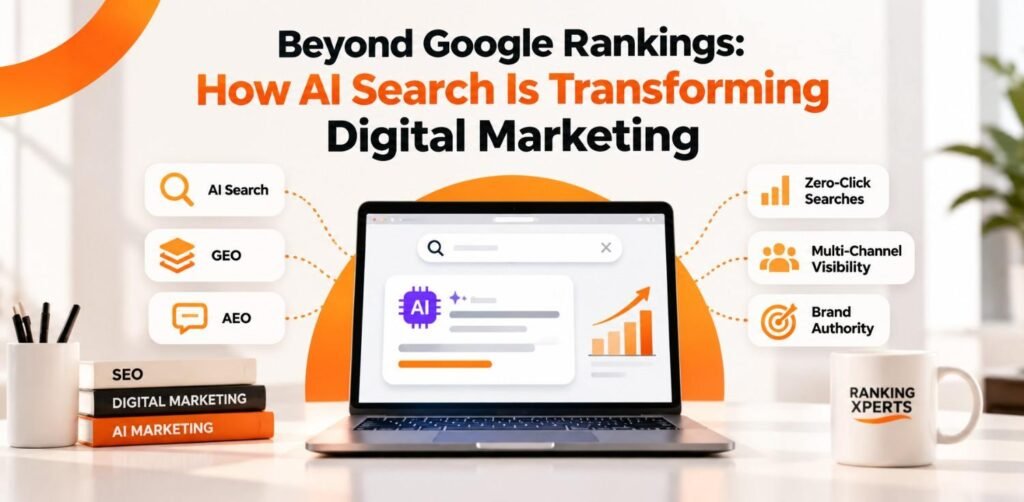
Digital marketing is evolving faster than ever. While traditional SEO remains essential, the way people discover businesses, research products, and make purchasing decisions is changing significantly. With AI-powered platforms like ChatGPT, Google AI Overviews, Gemini, and Perplexity becoming part of everyday search behavior, businesses need to rethink how they approach online visibility.
At Ranking Xperts, we believe staying ahead of digital trends means more than adapting to algorithm updates. It means understanding where your audience is searching, what information they need, and how your brand can become the trusted answer.
Let’s explore the biggest shift shaping digital marketing today: AI-powered search and Generative Engine Optimization (GEO).
What Is AI-Powered Search?
Traditional search engines provide users with a list of websites based on their queries. AI-powered search takes this experience further by generating direct, conversational answers using information gathered from multiple sources.
Instead of searching for “best digital marketing agency in Houston,” users might ask:
- Which digital marketing agency can help my business generate qualified leads?
- What is the best SEO strategy for a small business?
- Which marketing agency specializes in AI search optimization?
These conversational queries are changing how brands need to approach content creation, SEO, and online authority.
5 Digital Marketing Trends Businesses Should Watch
1. Generative Engine Optimization (GEO) Is Becoming Essential
GEO focuses on improving a brand’s visibility in AI-generated answers and recommendations. It complements traditional SEO by helping search engines and AI platforms understand, recognize, and reference your business.
Businesses should focus on:
- Publishing accurate, informative, and authoritative content.
- Building strong brand mentions across trusted websites.
- Answering specific customer questions clearly.
- Strengthening expertise and credibility.
- Maintaining consistent business information across platforms.
The objective is no longer just to rank on search engines but also to become a trusted source that AI systems can reference.
2. Answer Engine Optimization (AEO) Is Reshaping Content Strategy
Customers increasingly expect immediate answers rather than browsing multiple websites to find information.
AEO helps businesses structure their content to answer these questions effectively. Frequently asked questions, conversational headings, concise explanations, and well-organized information can improve the accessibility of content for both users and search engines.
Businesses should create content around real customer questions, not just high-volume keywords.
3. Zero-Click Searches Are Changing Organic Traffic
Search engines increasingly provide answers directly on their results pages through featured snippets, knowledge panels, and AI-generated summaries.
As a result, users may discover a brand without necessarily visiting its website.
This makes brand visibility, recognition, and trust increasingly important. Businesses should monitor more than organic traffic and keyword rankings. Brand mentions, search visibility, qualified leads, and conversions also provide valuable insights into marketing performance.
4. AI-Powered Content Needs Human Expertise
Artificial intelligence has made content creation faster and more efficient. However, publishing generic, repetitive, or unverified AI-generated content is not a sustainable strategy.
Successful content marketing requires a combination of AI efficiency and human expertise.
Brands should prioritize:
- Original insights and industry knowledge.
- Real-world examples and case studies.
- Expert opinions and practical recommendations.
- Fact-checked, accurate information.
- Helpful content that addresses genuine customer needs.
AI should support content development, not replace the expertise that makes content valuable.
5. Search Visibility Is Expanding Beyond Google
Consumers are discovering businesses through multiple channels, including Google, YouTube, Instagram, TikTok, and AI-powered platforms.
This means digital marketing strategies must become more integrated. A business may need SEO-optimized website content, engaging social media videos, informative blog posts, and a consistent brand presence across relevant platforms.
A unified digital marketing strategy helps businesses reach potential customers at different stages of the buying journey.
How Businesses Can Adapt to the New Search Landscape
Keeping up with these trends requires a strategic approach rather than simply adopting new tools.
| Strategy | Business benefit |
|---|---|
| AI SEO and GEO | Improve visibility across AI-powered search |
| Technical SEO | Strengthen website performance and crawlability |
| AEO-focused content | Answer customer questions effectively |
| Digital PR and brand mentions | Build authority and credibility |
| Local SEO | Reach customers searching for nearby services |
| Conversion optimization | Turn relevant traffic into qualified leads |
| Performance tracking | Measure visibility, engagement, and ROI |
Is Traditional SEO Still Relevant?
Absolutely. SEO is not disappearing; it is evolving.
Technical optimization, relevant keywords, quality backlinks, user experience, and valuable content continue to play an important role in digital visibility.
The difference is that modern SEO needs to account for both traditional search engines and AI-powered discovery platforms. Businesses that combine established SEO fundamentals with emerging AI search strategies will be better positioned to adapt to changing customer behavior.
The Future of Digital Marketing Is About Being Discoverable and Trusted
The digital marketing landscape presents a significant opportunity for businesses willing to adapt. AI-powered search, GEO, AEO, and evolving consumer behavior are changing how brands compete for attention online.
The key is to build a strategy that prioritizes visibility, credibility, and meaningful customer engagement. At Ranking Xperts, we help businesses navigate the evolving digital landscape through data-driven SEO, AI SEO, GEO, local SEO, and comprehensive digital marketing strategies.